
Caro-Kann Defense: Advance Variation, Tal Variation · B12
One Queen Move Changed EverythingPanchol vs Jacob
One queen move changed the course of Panchol vs Jacob. See how a central pawn break, open-file activity and a sequence of forcing moves turned a balanced Caro-Kann into a decisive attack.
The game
- White
- Manyok Chaderek Panchol (2077)
- Black
- Jacob, Jallah (1881)
- Result
- 1-0
- Event
- Olymp 2026 Open
- Round
- 4.289
- Date
- 19 Sept 2026
- ECO
- B12
- Opening
- Caro-Kann Defense: Advance Variation, Tal Variation
- Length
- 14:48
- Level
- club
About this game
Panchol vs Jacob: a game from the Caro-Kann Defense. Played at Olymp 2026 Open, 2026.
Lessons
What you'll learn
Central pawn break
When and why the centre is challenged with a pawn — the moment the structure changes, and the plans that change with it.
Open-file control
Why Black's rooks belong on the c-file, and what the file gives once a rook gets in behind the pawns.
Endgame with rooks and minor pieces
The principles that decide rook endgames: rook activity, the rook behind the passed pawn, and cutting the king off.
Forcing moves
How White keeps the initiative with a sequence of checks the opponent must answer.
Chapters
How the video is organised
- 0:00Opening
- 3:03Middlegame
- 6:48Endgame
- 14:11Takeaways
Key positions
The moments that decided it
16...Qc2 — the blunder
Black's king is still in the centre, and castling to safety was right there. Instead, Jallah plays 16...Qc2, sending the queen deep into White's position. It looks active, but the engine's verdict is brutal: the evaluation swings by nearly six pawns, from dead level to a decisive edge for White. Simply castling kept the position balanced. The queen on c2 has wandered offside while the king at home never got to safety, and White's pieces, already contesting the open c-file, are poised to exploit that. The lesson is familiar: a flashy-looking queen move means little if it leaves your own king ex
Qxd3: Grabbing the Queen
White's queen sits on d3, and Black simply takes it. The position still favors White by about five and a half pawns, since material overall still runs in White's favor, but grabbing the queen is the engine's own top choice here. It's not the end of the story though - this capture leads straight into a forcing sequence, starting with White's rook check on c8, that gives the queen right back. For now, watch the open c-file: that's where both sides still want their rooks.
Rxc8+: Rook Takes With Check
Black has just grabbed the queen on d3, but White isn't done swinging. The rook sweeps into c8 with check, picking up Black's rook there and forcing the king to respond. It's the engine's own top choice, and the evaluation barely moves, still deep in White's favor. The point is simple: on an open file, a rook that gets behind the enemy lines collects material while handing out checks. Black's king, still stuck in the centre, now has to find a square before anything else can happen.
Only Move: Nxd3
And White has only one way to deal with it. The knight captures on d3, and it's the engine's only move here — anything else leaves White's edge evaporating. The queens come off the board, and with them goes the complexity that favoured sharp calculation. What remains is a mixed-piece fight, material still clearly in White's favour, but Black's king still stuck in the centre with the c-file wide open. Trading queens doesn't trade away the problems. Black still needs to get that king to safety, and White still has the better structure to lean on. This is the moment the character of the game shif
Kg7 Walks Into Mate
White's position was already winning, up more than seven pawns in the engine's reckoning, but Black still had choices about how to resist. Here, with the rook already giving check and the knight circling toward e6, the king had to choose a path. The king moves to g7, but this walks straight into the mating net White has been building. The engine's verdict flips from a large but ordinary advantage to a forced mate. The alternative, moving the king to e7, would have kept the king closer to shelter and left White only overwhelmingly better, not forced to mate. Once the king steps to g7, every che
Nf7+: Mate in Five
This is the peak of the sequence White has been building since the knight landed on e6. Thirty-five, knight to f7, with check. No material changes hands, this is purely about the king's safety. Before the move, White was already decisively winning. After it, the attack becomes a forced mate. The point is forcing play: Black's king has nowhere safe to go, and every reply is another check or another loss of material. The engine actually preferred a quieter continuation, simply repositioning the king, which shows this attack didn't need perfection, just relentless pressure. For Black, the positio
Replay
Play through the game
Move 0 of 71. Positions are generated from the PGN by a deterministic chess library.
Keep learning
Related games
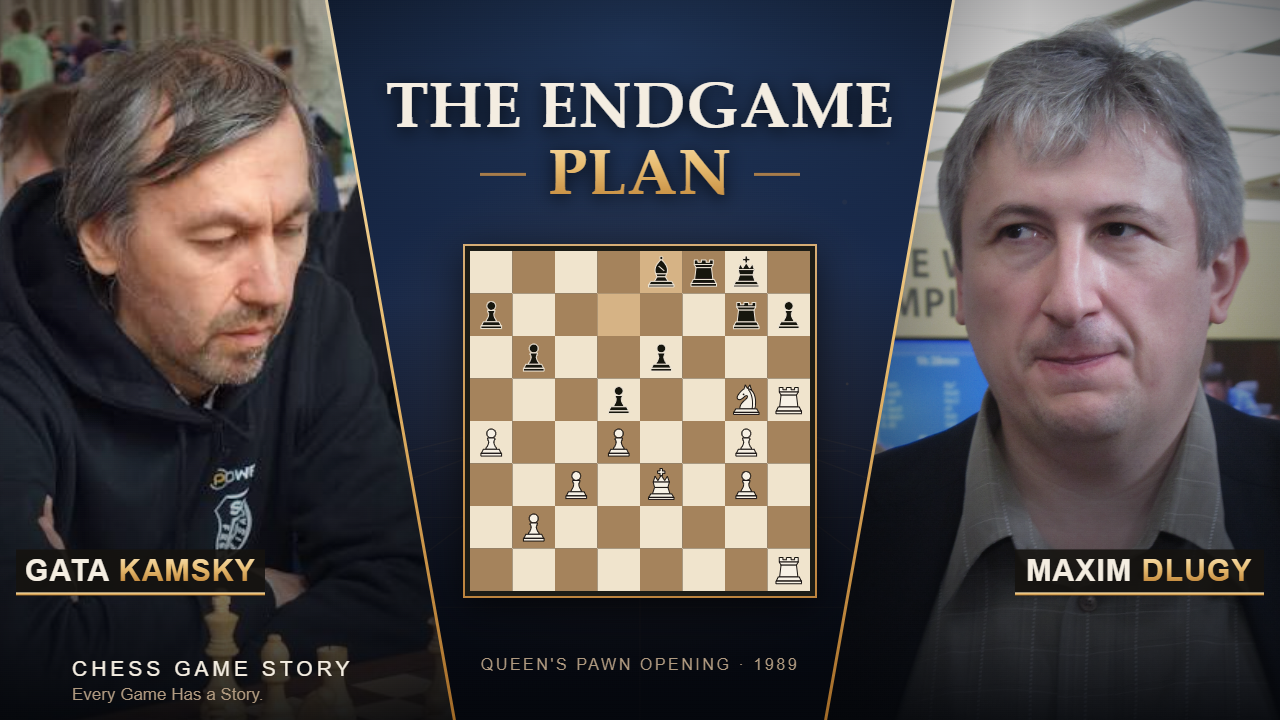 UnclassifiedD0214:49
How Kamsky Beat Dlugy with the Queen's Pawn Opening | Endgame, Strategy & Piece Activity
Kamsky, Gata vs Dlugy, Maxim
Endgame, Strategy & Piece Activity: what Kamsky vs Dlugy (Queen's Pawn Opening) teaches. The principles that decide rook endgames: rook activity, the rook behind the passed pawn, and cutting the king off.
Also teaches Open File
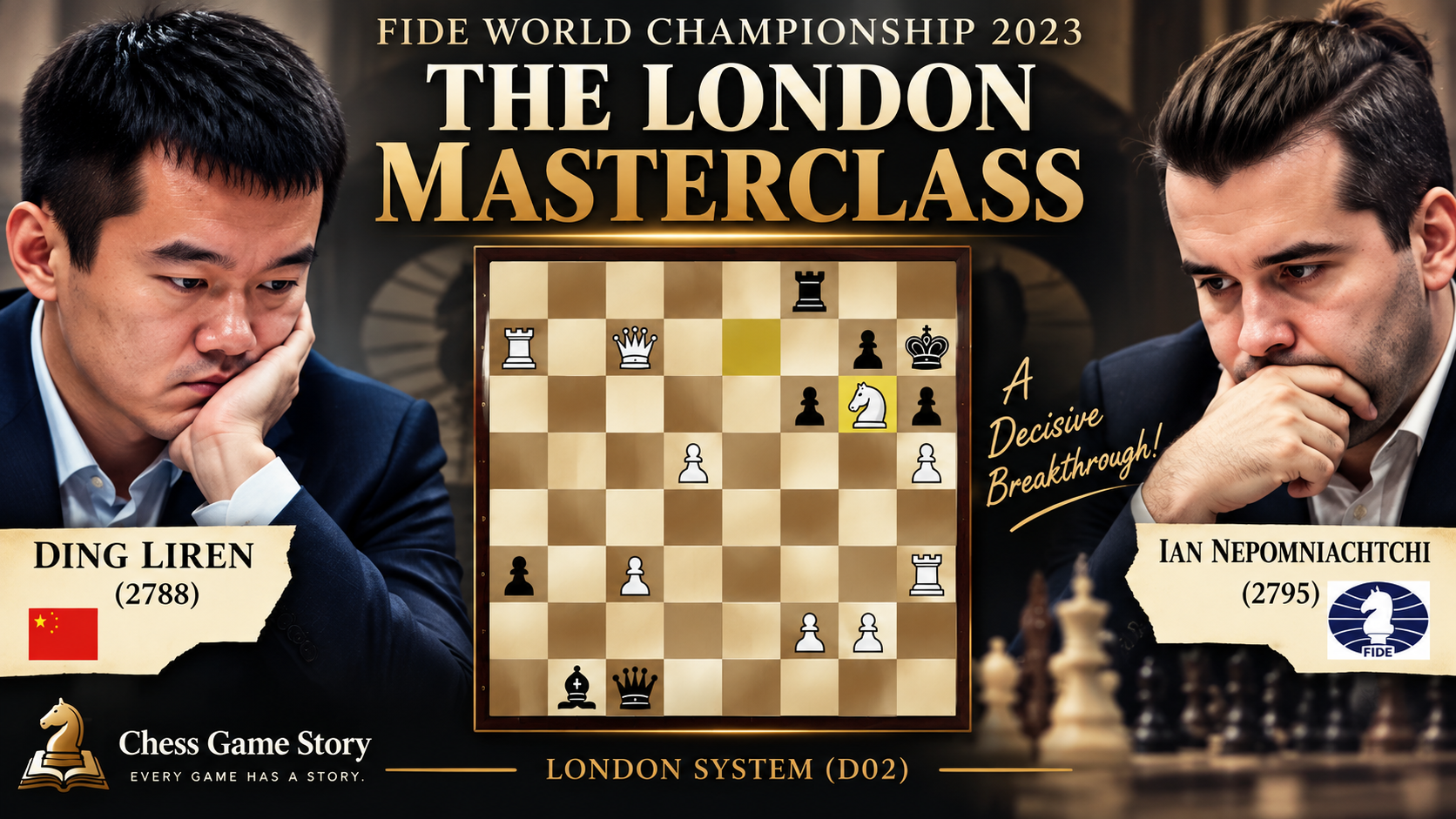 FeaturedLondon SystemD0212:54
Ding’s London System Masterclass | Plans, Strategy & Attack
Liren, Ding vs Nepomniachtchi, Ian
A small weakness quietly decides this World Championship game. Ding Liren against Ian Nepomniachtchi. Watch how one lasting edge grows until resignation follows.
Also teaches Open File
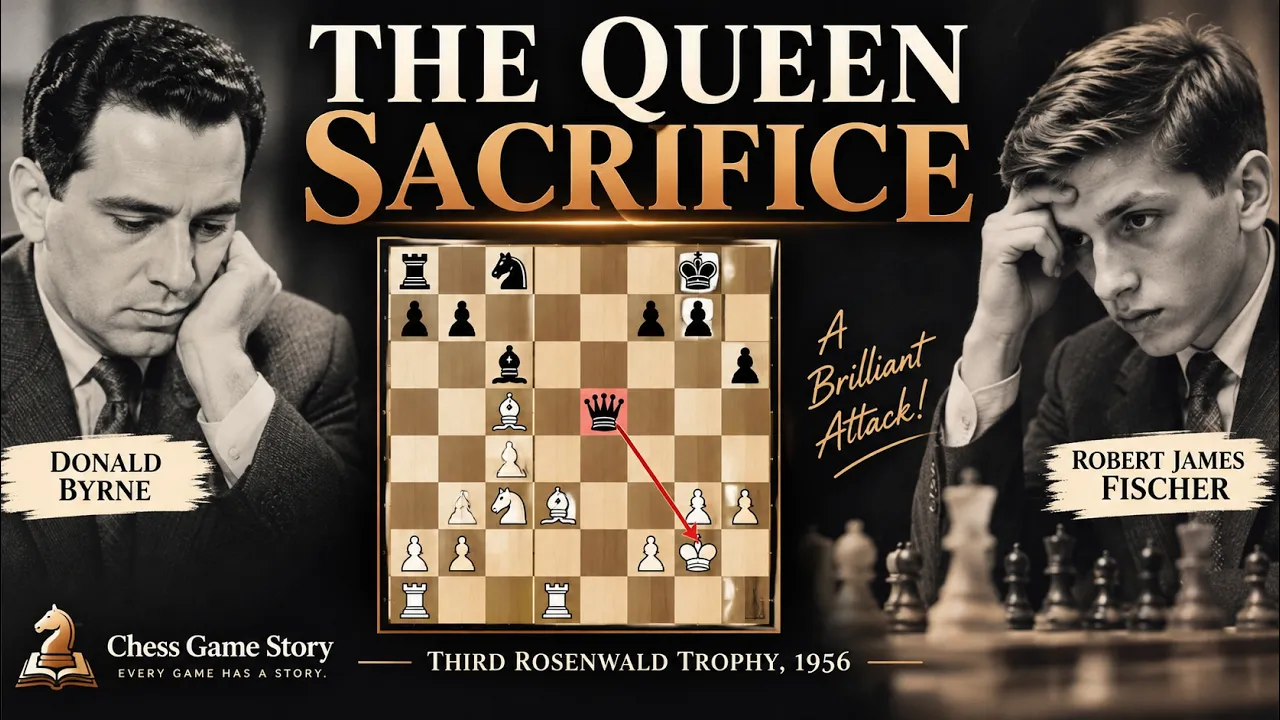 Grünfeld DefenceD9210:39
Donald Byrne vs Robert James Fischer — Third Rosenwald Trophy
Donald Byrne vs Robert James Fischer
One mistake hands over the initiative completely, and it never comes back. Donald Byrne against Robert James Fischer ends in checkmate, after bold play sets up a relentless king hunt.
Also teaches Forcing Sequence