
London System · A48
One Weakness Changed EverythingIbrahim vs Phillip, 2026
Ibrahim turns a small structural weakness into a commanding advantage. See how Black’s isolated d-pawn becomes a target, how White converts the advantage through active play and exchanges, and how the game ends with a passed pawn promoting into the queen that delivers mate.
The game
- White
- Dotse Sumya Ibrahim (1597)
- Black
- Phillip, Kiara
- Result
- 1-0
- Event
- Olymp 2026 Women
- Round
- 4.260
- Date
- 19 Sept 2026
- ECO
- A48
- Opening
- London System
- Length
- 18:08
- Level
- club
About this game
A quiet London System develops around Black’s isolated d-pawn. White targets the weakness, builds a decisive material advantage, and converts methodically before a passed a-pawn provides the spectacular finishing touch.
Lessons
What you'll learn
Let the pawn structure choose the plan
Black's isolated d-pawn gave White a clear target and organised the middlegame plan.
When the structure changes, the plan changes
Once the isolated pawn disappeared and files opened, White shifted from blockade and pressure to activity and conversion.
Convert winning positions methodically
Improve your pieces, reduce counterplay and keep choosing sound moves instead of searching for brilliance every turn.
A passed pawn can become an attacking piece
White's a-pawn promoted on a8, and the resulting queen ultimately delivered mate.
Chapters
How the video is organised
- 0:00Opening
- 4:16Middlegame
- 9:29Endgame
- 16:59Takeaways
Key positions
The moments that decided it
Only Move: dxe5
Black had just challenged the centre with the pawn break on e5, and here the only correct answer was to take it. White captures, dxe5, picking up the pawn and keeping the structure intact. It's the only move that holds the balance here; anything else lets Black's break pay off for free. The position stays close to level, but White keeps the extra pawn and a clear structural edge to work with as development continues.
The Pawn Gets Fixed
After White's pawn took on d6, Black recaptured the same way, with the pawn. It looks automatic, but it's the critical moment of the opening. The engine's preferred option was the knight capturing on f4, keeping the structure flexible and the position roughly balanced. Instead, the pawn recapture fixes Black's pawn on d6 with no neighbor on c or e file to support it. That pawn is now isolated, and White's evaluation jumps by nearly three pawns. The material stays level. What changes is that White now has a long-term target, while Black has to organize pieces around defending a pawn that can't
f6 loosens the king
Black had already fallen well behind, and here the position called for the pawn to go to f5, keeping the king's shelter intact while fighting for the centre. Instead Black played f6. It doesn't lose material on the spot, but it loosens the squares around Black's own king and lets White's pieces aim straight through the weakened diagonal. The evaluation jumped from plus four and three quarters to nearly plus nine for White — the advantage isn't just growing now, it's becoming decisive.
Knight Leaps to c3
Black's knight jumps from d5 into c3, planting itself deep in White's camp. It looks like it can simply be scooped up with the rook, and nothing about the position changes yet, material stays level. But White doesn't bite. Interestingly, the engine actually preferred a different idea for Black here, grabbing the bishop on e3 first, which keeps the pressure building rather than offering this piece outright. Still, the leap to c3 keeps the position tense, with the half-open d-file and Black's isolated pawn on d6 shaping what both sides are working toward from here.
Bxd6: the isolated pawn falls
That isolated pawn on d6 had been a target since the centre opened, and now White collects it with the bishop, wins the pawn, and closes out that theme. The engine preferred routing the knight to b5 first, angling toward d6 with tempo, but the material edge here is already enormous, so the difference barely registers. With the isolated pawn gone, the open d-file becomes the real battleground, and White's rook is about to claim it.
Knight for Bishop on f5
White trades the knight for Black's bishop with Nxf5. Black can recapture with the g-pawn, so the exchange itself is even, but White keeps the commanding overall material advantage. The recapture will also leave Black with doubled f-pawns and change the kingside pawn structure.
Replay
Play through the game
Move 0 of 87. Positions are generated from the PGN by a deterministic chess library.
Keep learning
Related games
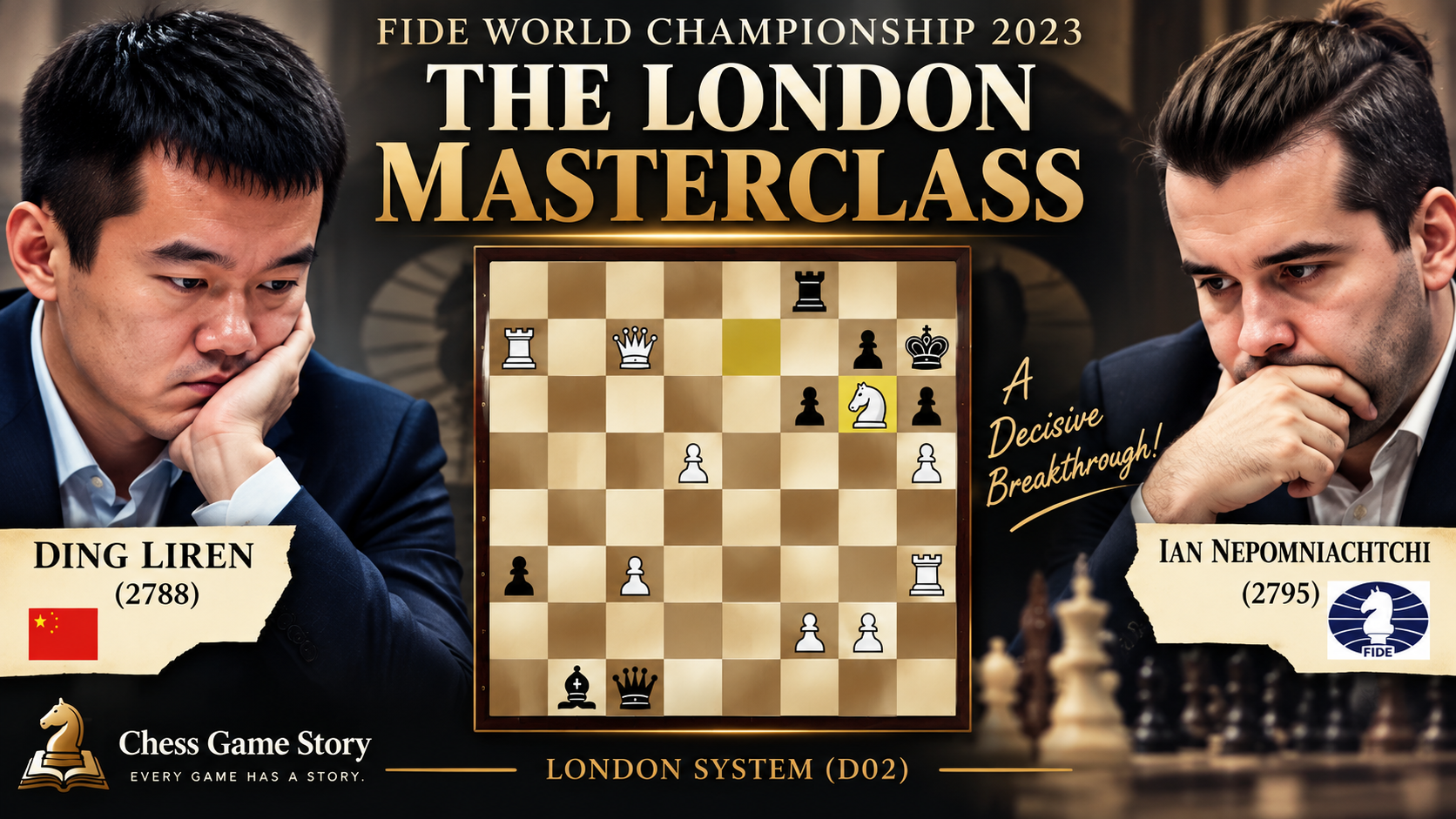 FeaturedLondon SystemD0212:54
Ding’s London System Masterclass | Plans, Strategy & Attack
Liren, Ding vs Nepomniachtchi, Ian
A small weakness quietly decides this World Championship game. Ding Liren against Ian Nepomniachtchi. Watch how one lasting edge grows until resignation follows.
Also a London System
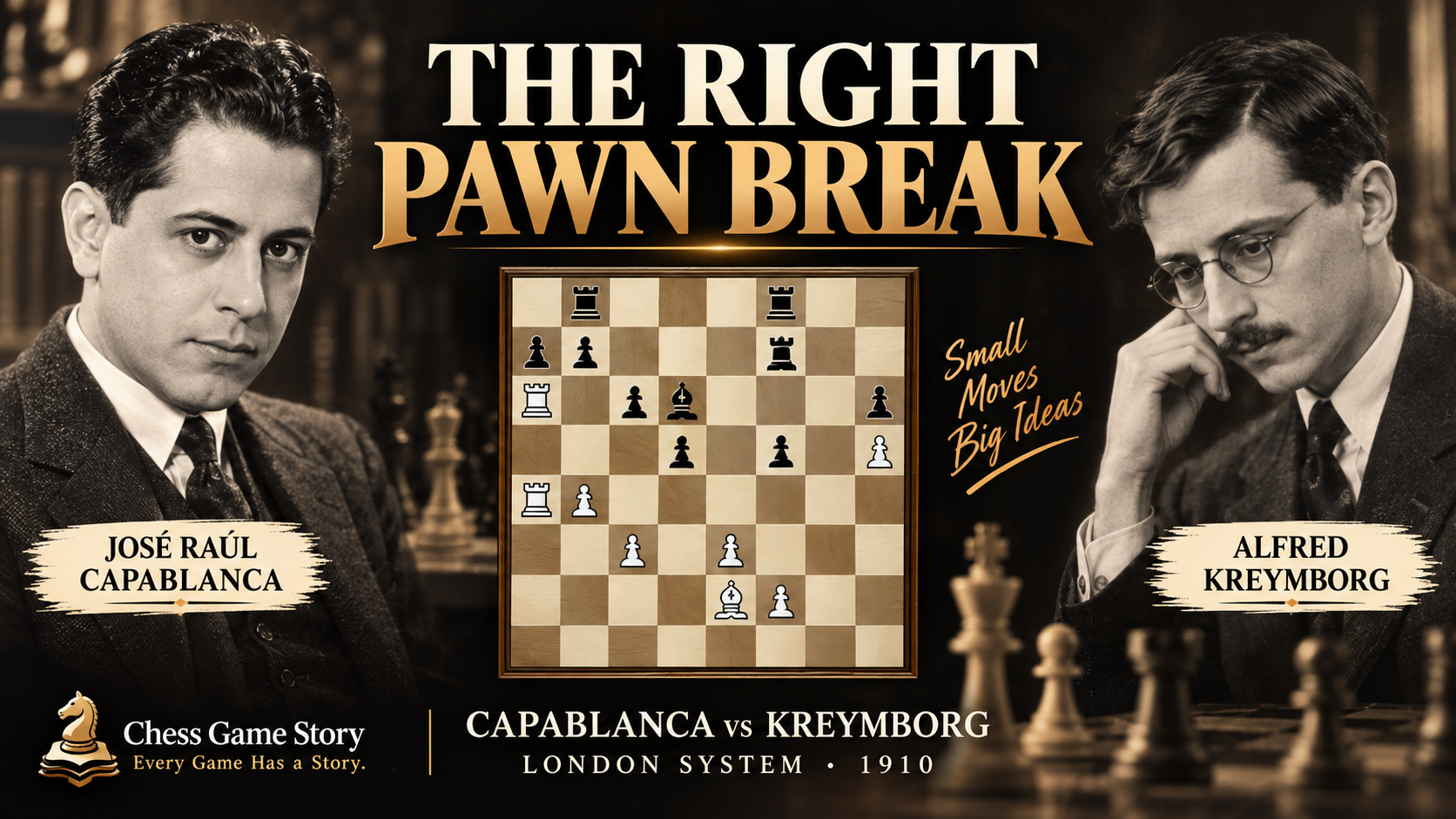 London SystemD0218:04
How Capablanca Beat Kreymborg with the London System | Attack, Strategy & Pawn Structure
Jose Raul Capablanca vs Alfred Kreymborg
Attack, Strategy & Pawn Structure: what Capablanca vs Kreymborg (London System) teaches. Both sides attack the other’s king with pawns and pieces — who is faster, and why every tempo counts.
Also a London System
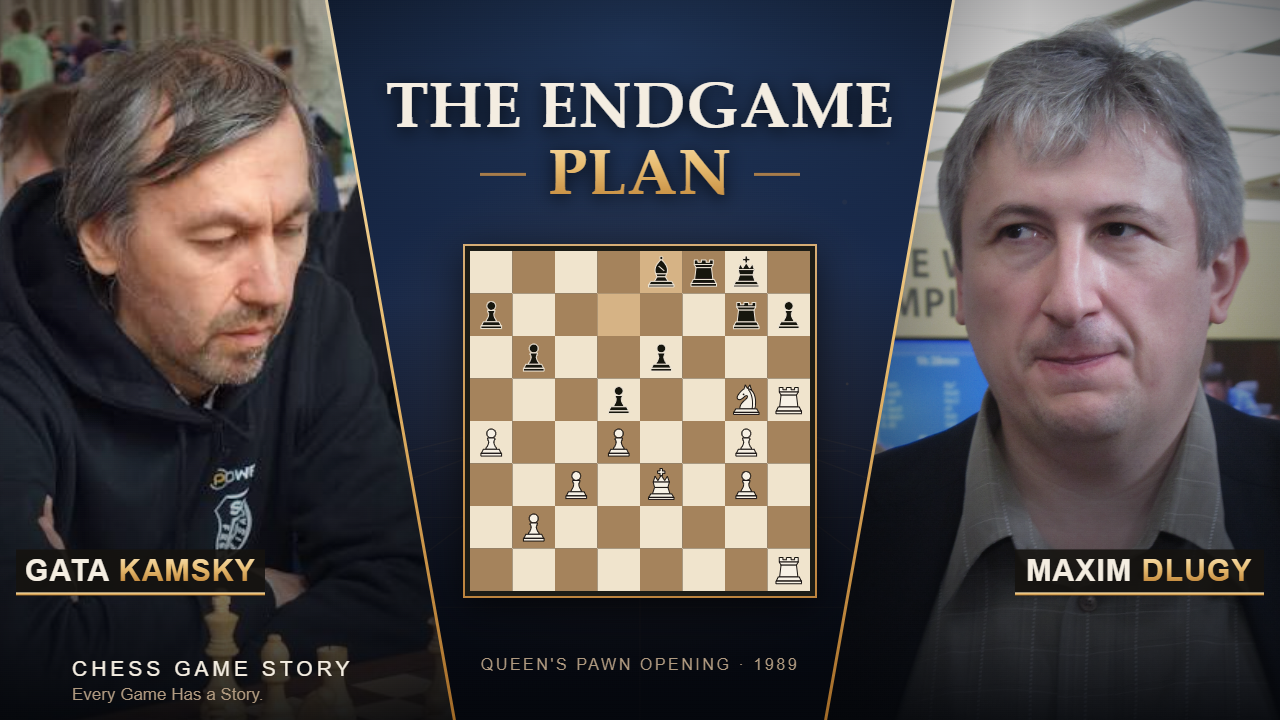 UnclassifiedD0214:49
How Kamsky Beat Dlugy with the Queen's Pawn Opening | Endgame, Strategy & Piece Activity
Kamsky, Gata vs Dlugy, Maxim
Endgame, Strategy & Piece Activity: what Kamsky vs Dlugy (Queen's Pawn Opening) teaches. The principles that decide rook endgames: rook activity, the rook behind the passed pawn, and cutting the king off.
Also teaches Transformation of Advantage